


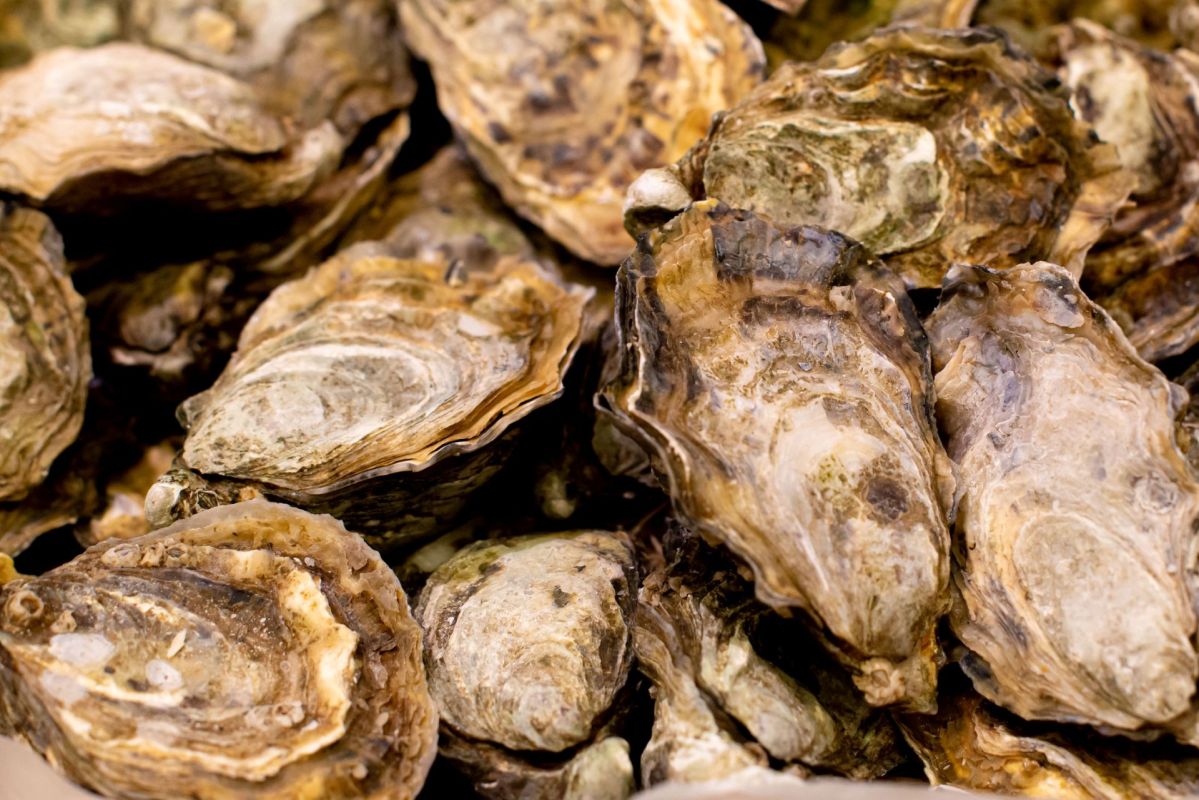
A salmonella-linked oyster recall now stretches across 15 states and Washington, D.C., and the U.S. Food and Drug Administration and Centers for Disease Control and Prevention said it has been tied to 27 illnesses and five hospitalizations.
Before the contamination warning was issued, the oysters had been harvested in Virginia and distributed in Maryland and other states.
Here's what to know
The FDA said the recall applies to oysters harvested by the Little Wicomico Oyster Company from Sept. 18 through Oct. 8 and sent to restaurants and retailers in Maryland, California, Colorado, Connecticut, Florida, Georgia, Illinois, Missouri, North Carolina, New Jersey, Nevada, New York, Pennsylvania, Texas, Virginia, and Washington, D.C.
The CDC recorded illnesses and hospitalizations linked to the outbreak, according to its website. The FDA warned consumers not to eat the oysters and told restaurants and retailers not to sell or serve them.
Only oysters harvested from the Little Wicomico River in Virginia are covered by this recall, as CBS Baltimore noted. Oysters harvested elsewhere in Virginia are not included. The FDA warned that contamination may not be detectable by look, smell or taste.
More background
The impact extends beyond a single river because Little Wicomico Oyster Company distributed its harvest widely during that time. The Little Wicomico River meets the Chesapeake Bay at the Potomac River near the Virginia-Maryland border.
TCD Picks » Quince Spotlight
💡These best-sellers from Quince deliver affordable, sustainable luxury for all




The FDA said salmonella commonly causes fever, diarrhea, and abdominal cramps, usually starting 12 to 72 hours after eating contaminated food and lasting four to seven days.
Young children, older adults, and people with compromised immune systems are at greater risk of severe infection.
What can be done?
The Virginia Department of Health temporarily halted harvesting in the Little Wicomico River, and the Little Wicomico Oyster Company also stopped harvesting in the affected area.
The FDA told businesses to pull the recalled oysters from sale or service and work with distributors to dispose of any suspect product.
The FDA said consumers who may have purchased or eaten the oysters should discard suspect products and clean and sanitize anything the oysters touched.
Anyone in a higher-risk group, or who is unsure whether the oysters they ate came from the Sept. 18 to Oct. 8 harvest window, should contact a health care provider if they develop fever, diarrhea, or abdominal cramps after eating oysters.
Meanwhile, the FDA and CDC are continuing their investigation, and guidance could be updated as more information emerges.
Where can I learn more?
Recent recalls and outbreak investigations show how widely foodborne illnesses can spread.
• The FDA recently tracked 12 foodborne outbreaks as four Salmonella sources remained unidentified.
• Imported Ecuador shellfish were tied to a hepatitis A outbreak that hospitalized 30 people.
• Across the U.S., Salmonella warnings jumped sixfold as food recalls reached 26 in August.
• The CDC tracked Salmonella outbreaks tied to eggs and restaurant-chain jalapeños in 30 states.

Get TCD's free newsletters for easy tips, smart advice, and a chance to earn $5,000 toward home upgrades. To see more stories like this one, change your Google preferences here.







