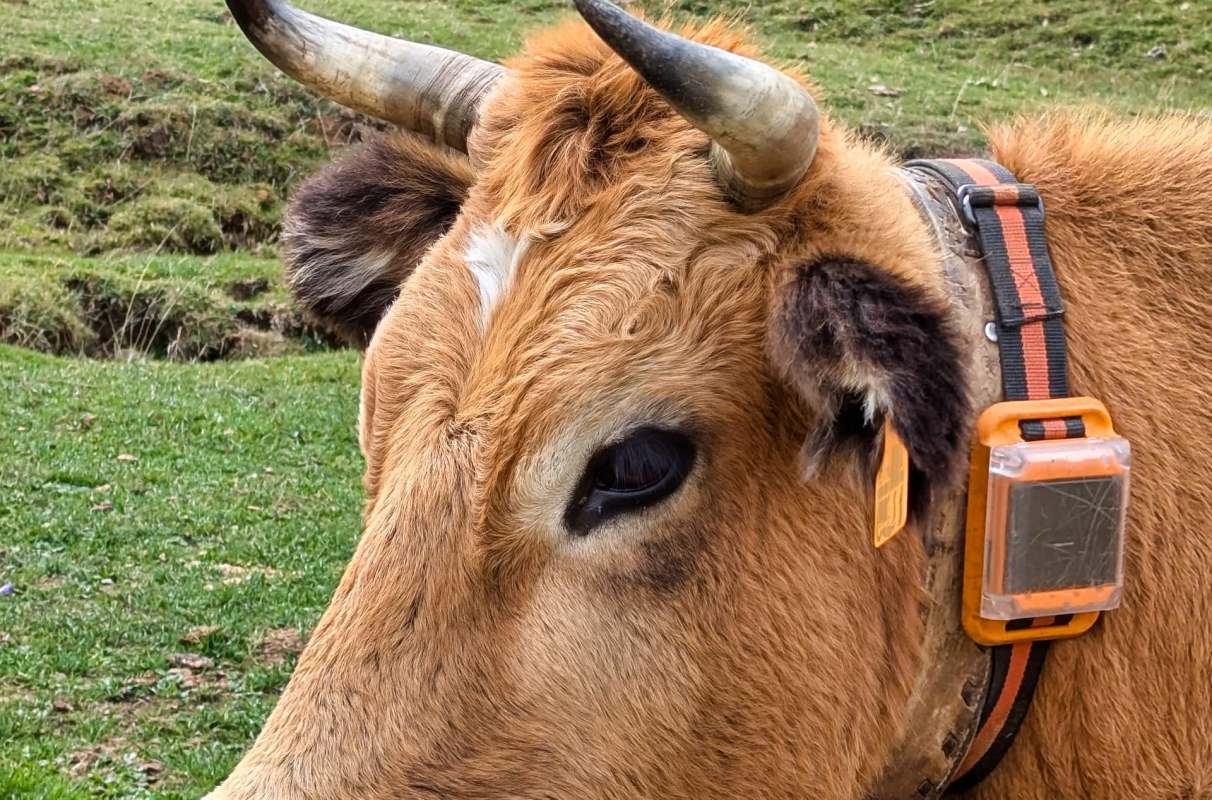
More than 6,000 cattle in Montana are wearing GPS-enabled collars that could save ranchers hours of searching while giving native grass a chance to recover between grazing rounds.
Here's what to know
Eight private ranches in southwest Montana are testing virtual fencing with help from The Nature Conservancy. Across the state, cattle participating in the project graze on 250,000 acres of private and public land.
Ranchers use a smartphone or laptop app to set the limits of a grazing area. The app communicates with battery- or solar-powered collars worn by the cattle.
Ranchers can create temporary pastures by adjusting those boundaries. A collar responds when an animal approaches a boundary by beeping, then vibrating, and finally delivering an electric startle.
Collin Peterson, a rangeland ecologist with TNC's Montana High Divide Headwaters program, said the technology lets cattle feed on native grass in one area while previously grazed ground regenerates. Ranchers manage this rotation by moving tightly grouped herds among smaller grazing areas.
Ranchers can spend hours or days searching for cattle. According to TNC, the collars offer an alternative by letting ranchers check the animals' locations on their phones.
TCD Picks » Quince Spotlight
💡These best-sellers from Quince deliver affordable, sustainable luxury for all




More background
Hundreds of plant and animal species, including greater sage-grouse, inhabit the Sagebrush Sea. The Montana project sits within this ecosystem, which extends across 13 Western states.
Invasive grasses, drought-fueled wildfires, development, and overgrazing together account for an estimated annual loss of 1.3 million acres from the sagebrush biome.
Building and maintaining traditional fencing can cost up to $24,000 per mile, according to TNC.
Ranchers still need some traditional fences, but virtual fencing gives them more flexibility to change grazing boundaries. It can also reduce some fence construction and maintenance expenses.
Keeping cattle out of streams can protect streamside habitat and improve water quality. Reducing fencing can also give pronghorn, which struggle to jump fences, better access to food and water.
According to TNC, strategic grazing can create gaps in vegetation that influence a wildfire's speed or behavior. Targeted grazing can also help control invasive cheatgrass.
What's being done?
TNC is covering equipment costs and seeking grant funding to reduce ranchers' financial risk as they test the technology. Its partnerships also extend into Oregon and Wyoming, where ranchers are exploring uses suited to their terrain and operations.
Trout Creek Ranch in southeast Oregon includes permits to graze cattle on 500,000 acres of nearby public land. TNC helped the Oregon Desert Land Trust acquire the 16,645-acre property in 2022.
Ranchers are working with both organizations to make virtual fencing part of their grazing management.
Conventional fence construction is impractical in remote mountain pastures at TNC's 5,000-acre Red Canyon Ranch in Wyoming. According to TNC, neighboring ranchers are testing collars in those areas.
TNC Wyoming Stewardship Director John Coffman said virtual fencing also helps with winter feeding. Ranchers place feed in one location and use the technology to guide cattle toward it, reducing the need to search for the animals beforehand.
Peterson said: "It's really just trying win-win solutions that keep working ranches in business and maintain ranchers' way of life while keeping the land healthy. The ranchers we work with know as much, if not more, about vegetation dynamics than my college training has given me. This is their livelihood and their passion. Ranchers are critical partners in conservation and the protection of our lands."
Where can I learn more?
Moving cattle between pastures is just one part of managing a ranch. These stories cover rotational grazing, drought-driven hay shortages, farm connectivity gaps, shared solar pastures, and limestone's carbon-trapping potential.
• A farmer moves water buffalo every three days, followed by goats, sheep, chickens, and ducks.
• In Virginia, drought cut a farmer's hay harvest by two-thirds, leaving 500 pregnant cows to feed.
• New Zealand farmers say the 3G network shutdown left half their farms with limited coverage.
• Farmers in the Mississippi River Basin spread limestone that traps more carbon dioxide than it emits.

Get TCD's free newsletters for easy tips, smart advice, and a chance to earn $5,000 toward home upgrades. To see more stories like this one, change your Google preferences here.