


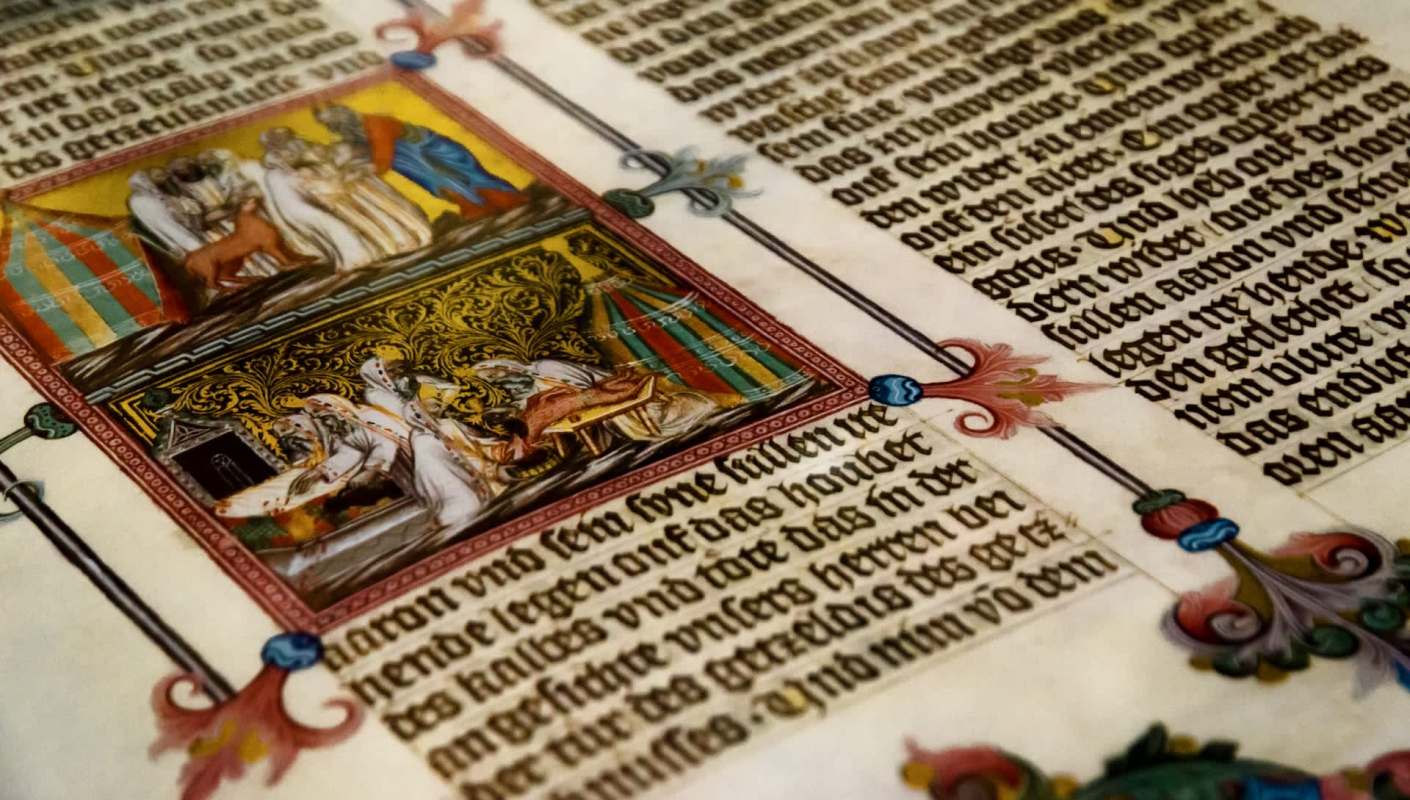
Some of Britain's treasured medieval manuscripts hold a history their scribes never intended to record: evidence of a livestock virus. Researchers have recovered ancient sheeppox DNA from parchment, helping trace thousands of years of disease — and potentially informing efforts to fight it.
Here's what to know
Viral DNA recovered from ancient sheep teeth and manuscripts allowed a University College Dublin-led research group to trace more than 3,500 years of sheeppox evolution, according to The Daily Galaxy. Science Advances published the study.
The manuscripts came from Britain and continental Europe. Among them were the Corpus Glossary, an early English dictionary held at Cambridge's Corpus Christi College, and the York Gospels, an illuminated work from the early Anglo-Saxon period.
Traces of infection can survive in an animal's hide after its death, even after the skin has been prepared for use as parchment.
Sheepskin, calfskin, and goatskin pages all yielded traces of sheeppox when researchers examined several manuscripts.
The team suggested that the hides may have picked up viral material during parchment production. Alternatively, sheeppox may occasionally have infected other livestock species.
TCD Picks » Quince Spotlight
💡These best-sellers from Quince deliver affordable, sustainable luxury for all




More background
Young sheep face a particularly high risk of dying from sheeppox, a disease that spreads easily through flocks and can kill large numbers of animals.
Farmers face substantial economic losses not only from livestock deaths but also from reduced wool, meat, and milk production.
Louis L'Hôte, the study's lead author and a PhD candidate at University College Dublin, pointed to an economically damaging outbreak in Greece, The Daily Galaxy reported.
Researchers also examined Bronze Age sheep teeth from sites on the Eurasian steppe once occupied by pastoralists.
The teeth yielded sheeppox genetic material older than any previously identified, extending evidence of the disease back more than 3,700 years.
Comparisons with modern viruses suggest that the split separating sheeppox, goatpox, and lumpy skin disease virus occurred 3,700 to 11,500 years ago. That period encompassed livestock domestication and major movements of sheep into Europe.
What's being done?
The researchers brought together expertise in conservation, virology, genetics, history, and protein chemistry to investigate manuscripts as biological records.
L'Hôte raised the possibility of finding more genetic evidence of past livestock outbreaks in archives and libraries worldwide.
"Parchment making has been considered a vanishing craft, but we are beginning to understand just how much of the past it has retained," Kevin G. Daly, the study's supervising author, said, according to The Daily Galaxy. "This project shows that parchments not only preserve our cultural history for hundreds of years, but also the landscape of disease in our livestock in the medieval period."
A comparison of modern and ancient viral sequences also revealed little change in the sheeppox genome over several millennia.
"This might mean that genetic changes before this point were very important to how the sheeppox virus evolved to infect its host, which may help us fight the pathogen in the future," L'Hôte explained.

Get TCD's free newsletters for easy tips, smart advice, and a chance to earn $5,000 toward home upgrades. To see more stories like this one, change your Google preferences here.






