


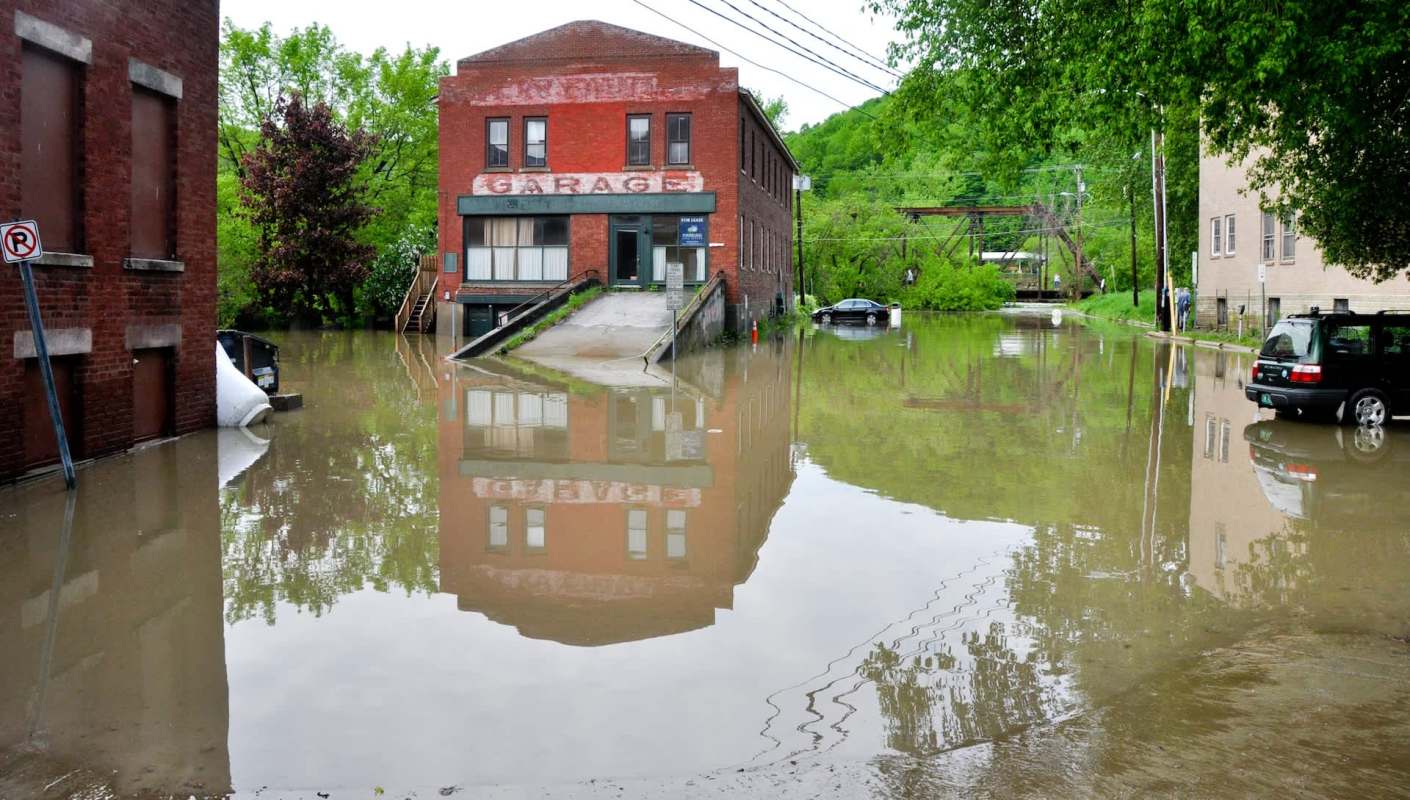
For Vermont families rebuilding after deadly floods, delays in receiving help meant more than unfinished repairs. Some drained retirement savings, took on debt, or remained in unsafe homes as the state's disaster case management programs struggled to reach survivors.
Here's what to know
State case managers helped 70 households secure financial support following Vermont's 2024 floods, according to a VTDigger investigation. More than 2,000 households had applied for Federal Emergency Management Agency aid.
Vermont recovery officials focused on damage reports submitted through the state's 2-1-1 hotline for 10 months in 2025, leaving a federal list of survivors unused, according to VTDigger. Case managers' job is to help survivors secure money for home repairs or relocation.
When officials turned to FEMA's data in November 2025, they identified about 1,700 households missing from the hotline list.
Survivors denied FEMA assistance faced a February 21, 2026, deadline to appeal. Case managers scrambled to contact households before that window closed, ultimately securing about $673,000 from FEMA and philanthropic sources for 70 households, VTDigger reported.
Vermont's chief recovery officer, Doug Farnham, said outreach efforts also included press conferences, community events, and local recovery groups.
TCD Picks » Quince Spotlight
💡These best-sellers from Quince deliver affordable, sustainable luxury for all




More background
After the 2023 floods, Vermont's case management program took eight months to begin helping survivors, according to Liz Scharf, who helped oversee Capstone Community Action's case management work. FEMA received aid applications from more than 6,000 households, while the FEMA-funded program opened 404 cases, VTDigger reported.
For Jessica Farrar, a flood survivor in Cavendish, the gap in assistance meant staying in a damaged mobile home. FEMA approved $5,319, but repairs alone required more than $25,000. She said no state case manager contacted her.
"We did not have the money to pay rent to live somewhere else while we're trying to fix our house," Farrar said. "We lived in our house even though it was deemed unsafe."
A University of Vermont report found that the state experiences 40% more days with rainfall exceeding one inch than it did in 1900.
Flooding in 2023 and 2024 damaged more than a dozen mobile home parks, leaving some with almost no homes intact, VTDigger reported.
What's being done?
Vermont phased out its contractor by March 2026 and began administering the program itself, Farnham said. Officials plan to return $1 million of the $2.9 million FEMA provided to operate the post-2024 case management program, VTDigger reported.
Farnham said officials are working with FEMA to develop an application template that could be preapproved to shorten approval times after future storms. The state is also developing a household recovery plan that includes coordination with volunteers and community recovery groups, said Jason Gosselin, who directs emergency management at the Vermont Agency of Human Services.
Those groups have managed several hundred cases following the 2023 floods. But when Waterbury recovery group leader Mike Dacey requested state payment for additional work during the November 2025 outreach push, Gosselin said funding was unavailable.
Sue Minter, who led the nonprofit Capstone Community Action during the 2023 response, recommended establishing agreements in advance so case managers can deploy immediately after flooding.
Charlotte Hackett, a former state employee who worked on recovery, said, "A lot of folks simply were out of luck by the time we came in."

Get TCD's free newsletters for easy tips, smart advice, and a chance to earn $5,000 toward home upgrades. To see more stories like this one, change your Google preferences here.






