


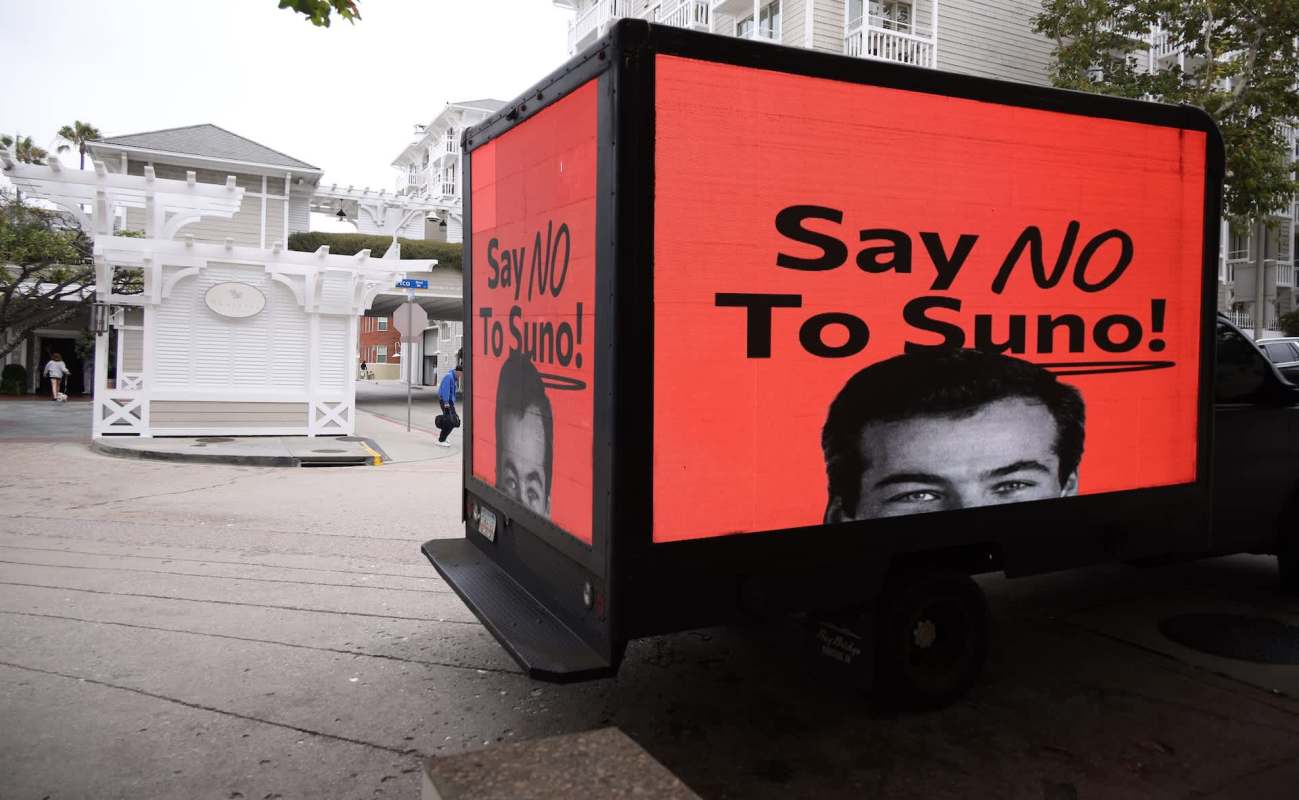
After accusing AI music startups of copyright infringements, record labels are now licensing their catalogs to the very same platforms, the Los Angeles Times reported.
Here's what to know
In September 2026, Suno introduced its first models built with licensed music from Warner Music Group, BMG, and Believe. At the same time, rival company Udio has reached licensing agreements with Universal Music Group and Warner. The companies say artists who participate can opt in and get paid — though payout terms and participation numbers have not been publicly disclosed.
That reversal comes after Universal, Sony Music Entertainment, and Warner sued Suno and Udio in 2024, alleging that the AI companies trained their models on copyrighted music without permission.
Universal settled with Udio in October 2025 and later partnered with it. Warner resolved its disputes with both Udio and Suno in November 2025.
Sony, meanwhile, filed a second lawsuit against Udio over more than 30,000 recordings and continues to sue Suno alongside Universal. Sony and Universal also filed another case alleging that Suno's newest model still infringes their copyrighted works.
Entertainment attorney Jane Davidson of Nolan Heimann, whose work focuses on copyright and trademark infringement, told the LA Times, "The reason why they would settle this is they think they're going to profit more from licensing music to them rather than from the outcome of a lawsuit."
TCD Picks » Quince Spotlight
💡These best-sellers from Quince deliver affordable, sustainable luxury for all




Pasadena-based session musician Matt Evans described the situation as "sort of a creepy and ominous cloud."
Evans continued, "The fact that I could do something once and then it could be reused, and if that's not negotiated in a contract, then I never got to make a choice to receive additional compensation. It all comes down to the loss of money."
More background
The way music rights are divided makes these agreements hard to untangle. A song usually has one copyright covering the composition and another covering the sound recording, and labels do not always own both.
According to Davidson, contracts with major labels often give the companies the authority. That could leave artists with limited real control over how companies use their work in AI systems.
The co-founder and leader of the nonprofit Songwriters of North America, Michelle Lewis, warned, "With AI, it's so much easier to tell if you've infringed on the sound recording. You know what Beyoncé and Drake's voices sound like. But songwriting is so much more nebulous, so much harder to sue."
In June, the American Federation of Musicians sued Universal and Warner, alleging that the labels licensed recordings featuring its members to Suno and Udio without compensating those musicians or telling the union which recordings were involved.
AFM International President Tino Gagliardi said the labels were "bypassing the very human creators who made their catalogs valuable in the first place."
What's being done?
Udio uses a "walled garden" setup in which people can't download or distribute tracks made on the platform elsewhere. Suno says download caps and watermarks are meant to reduce abuse. People can distribute songs made with Suno's newer models through Believe and TuneCore.
According to the LA Times, courts are still weighing how far these licensing arrangements can reach. A proposed class action filed by musician Jason Isbell and other musicians alleges that Suno allows users to generate songs that evoke specific artists' identities without consent. A Munich court ruled against Suno in July in a case brought by GEMA, the German royalty group for songwriters and publishers.
Where can I learn more?
• Across the industry, human artists are losing money as AI-generated tracks flood streaming platforms.
• Country artists say AI-generated songs are scary as synthetic tracks reach Billboard.
• Taylor Swift moved to protect her voice and likeness as AI impersonation tools spread.
• In U.S. courts, publishers and creators warn copyright lawsuits could upend AI if judges reject unlicensed training.

Get TCD's free newsletters for easy tips, smart advice, and a chance to earn $5,000 toward home upgrades. To see more stories like this one, change your Google preferences here.






